Potty Training a Puppy: Timeline & Schedule
Bringing a new puppy home is exciting—but potty training often feels overwhelming. You've probably heard conflicting advice: some people swear their puppy was trained in weeks, while others struggle for months. The truth? Potty training a puppy is less about magic tricks and more about understanding your puppy's biology, setting realistic expectations, and following a consistent schedule.
This guide breaks down the realistic timeline for house training a dog, explains how biology affects your puppy's ability to hold it, and gives you a day-by-day schedule to follow. Whether you're dealing with a stubborn eight-week-old or a determined four-month-old, you'll find actionable strategies that actually work.
How Long Does Potty Training a Puppy Actually Take?
Let's start with the uncomfortable truth: most puppies aren't reliably housetrained until 4–6 months old. Some take longer. This isn't a reflection on your training methods—it's biology.
Puppies have tiny bladders and minimal sphincter control. Before 8 weeks, they physically cannot hold urine for extended periods. A general rule: puppies can hold it for roughly one hour per month of age, plus one. So a three-month-old puppy can typically hold it for about 4 hours maximum.
Timeline expectations:
- 8–12 weeks: Puppies understand the basic concept of going outside, but accidents happen constantly. Success rate: 20–30%.
- 3–4 months: Bladder control improves noticeably. With consistency, you'll see fewer accidents indoors. Success rate: 50–70%.
- 5–6 months: Most puppies can make it through the day with rare accidents. Success rate: 80–90%.
- 6+ months: Full reliability, especially overnight, becomes realistic for most breeds.
Small breeds (Chihuahuas, Yorkshire Terriers) may take longer due to smaller bladders. Large breeds sometimes train faster because they have proportionally larger bladders. Individual genetics, health, and your consistency all play roles.
Understanding Your Puppy's Bathroom Schedule
A puppy bathroom schedule is your foundation. Puppies go to the bathroom:
- First thing in the morning (within 5–15 minutes of waking)
- After meals (within 15–30 minutes)
- After playtime (within 5–10 minutes of activity stopping)
- After drinking water (within 15–30 minutes)
- Before bedtime (30 minutes before sleep)
- At random times throughout the day (every 1–3 hours depending on age)
Your job is recognizing these natural bathroom windows and catching your puppy outside for them. Here's what a realistic daily schedule looks like for a 10-week-old puppy:
Sample 10-Week-Old Puppy Schedule:
- 7:00 AM – Wake up, immediate bathroom break
- 7:30 AM – Breakfast, then bathroom break at 8:00 AM
- 9:00 AM – Playtime, then bathroom break at 9:15 AM
- 12:00 PM – Lunch, then bathroom break at 12:20 PM
- 2:00 PM – Bathroom break (mid-day accident prevention)
- 3:30 PM – Snack/water, then bathroom break at 3:50 PM
- 6:00 PM – Dinner, then bathroom break at 6:20 PM
- 8:00 PM – Final playtime, then bathroom break at 8:20 PM
- 10:00 PM – Bedtime bathroom break
This is frequent, yes. That's the point. Consistency builds habits faster than sporadic attempts. As your puppy ages, you'll gradually reduce the number of breaks.
Practical House Training Techniques That Work
Having a schedule is half the battle. Here's how to execute it:
Choose a designated bathroom spot. Always take your puppy to the same area outside. Your scent cues (pheromones) mark the spot, signaling to your puppy, "This is where we go."
Use a command. As your puppy is going, say "Go potty" or "Do your business" consistently. Over weeks, the command becomes a trigger. Eventually, you can say the command and your puppy goes on cue.
Reward immediately. The second your puppy finishes, celebrate enthusiastically with treats and praise. This creates a positive association: outside bathroom = amazing rewards. Don't reward afterward—your puppy won't connect it.
Supervise constantly indoors. Until your puppy is reliably trained, they should never be unsupervised. Watch for sniffing, circling, or whining—these are signs they need to go. If you miss it, they'll have an accident, and indoor accidents reinforce that behavior.
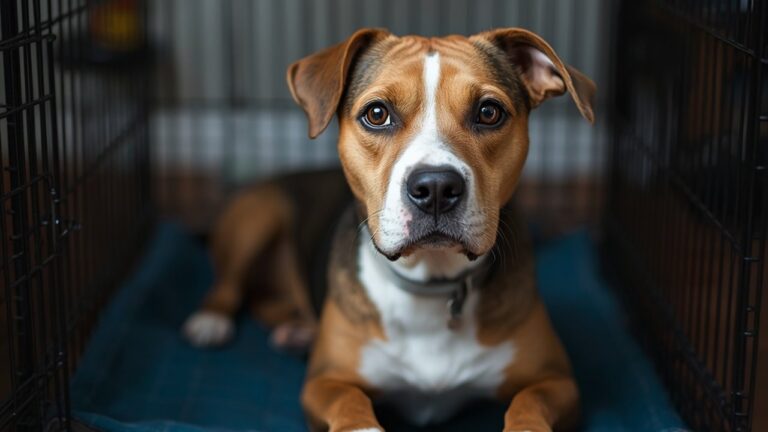
Use a crate strategically. Puppies instinctively avoid soiling their sleeping area. A properly-sized crate (large enough to stand and turn around, not spacious enough to bathroom in one corner and sleep in another) leverages this instinct. Crate time between supervised play sessions prevents accidents.
Clean accidents thoroughly. Regular cleaners don't work—enzyme-based cleaners break down urine compounds and eliminate the scent that attracts puppies back to that spot. If your puppy keeps having accidents in one location, that's usually old scent, not stubbornness.
Avoid punishment. Yelling, rubbing a nose in it, or hitting teaches your puppy to fear you and go to the bathroom secretly, not to be housetrained. It's counterproductive and damaging.
Common Setbacks and How to Handle Them
Even with perfect consistency, you'll hit bumps. Here's what to expect:
Regression. Your puppy was trained for two months, then suddenly has accidents again. This happens with vet visits, diet changes, new environments, or even new family members. Stay the course—it typically resolves in days to weeks.
Nighttime accidents. Overnight training is a separate skill. Most puppies shouldn't be expected to sleep through the night without a bathroom break until 4–5 months old. Consider a late-night pee break at 11–midnight, and don't be surprised by 6 AM accidents at 12 weeks. Waterproof pee pads on the crate floor aren't failure—they're practical management.
Stubborn refusal to go outside. Sometimes puppies get distracted or scared of the outdoors. Stay calm, give them 10–15 minutes in the designated spot, and if nothing happens, bring them back inside, crate them for 20 minutes, then try again. This is rarely defiance—usually fear or distraction.
Submissive or excitement urination. Some puppies leak urine when greeting people or during play. This isn't a bathroom schedule problem—it's an anxiety or excitement issue that often resolves with age and positive associations.
Final Thoughts: Patience Pays Off
Potty training a puppy isn't rocket science, but it requires patience, consistency, and realistic expectations. You're not failing if your puppy has accidents at three months old—that's completely normal. Your job is showing up, following the schedule, and rewarding success.
Within 3–6 months, with consistent effort, most puppies become reliably housetrained. The key is accepting that this is a developmental process, not a behavioral flaw you're correcting. Your puppy isn't trying to frustrate you; they're literally learning a new skill.
Stay consistent, celebrate small wins, and trust the process. A few months of dedicated training pays dividends in a lifetime of a well-trained companion.
FAQ
At what age can you start potty training a puppy?
You can begin teaching the concept as early as 7–8 weeks old, but puppies typically lack full bladder and sphincter control until 3–4 months. Expect frequent accidents before 3 months; consistency matters more than age. Most puppies grasp the basics by 4 months and achieve reliability by 5–6 months.
How many times a day should a puppy go outside to potty?
Puppies under 3 months need bathroom breaks every 1–2 hours during the day, plus after meals, playtime, and sleep—typically 8–12 times daily. By 4–5 months, this reduces to 6–8 times daily. By 6 months, 4–6 times daily is typical. The goal is preventing accidents by catching natural bathroom windows.
What’s the best house training method for dogs?
Consistency-based outdoor scheduling combined with immediate rewards (treats, praise) is most effective. Supervise indoors closely, use a crate when unsupervised, establish a designated bathroom spot, use a command word, and clean accidents with enzyme cleaner. Avoid punishment; it damages trust and doesn’t teach bladder control.
Why does my puppy keep having accidents even with a schedule?
Common causes include incomplete bladder development (age 3–4 months is normal), medical issues like UTIs, missed bathroom windows, insufficient supervision, or old scent attracting them to previous accident spots. Ensure you’re using enzyme cleaner and not punishing. If accidents persist beyond 5–6 months or occur with straining, consult a vet.